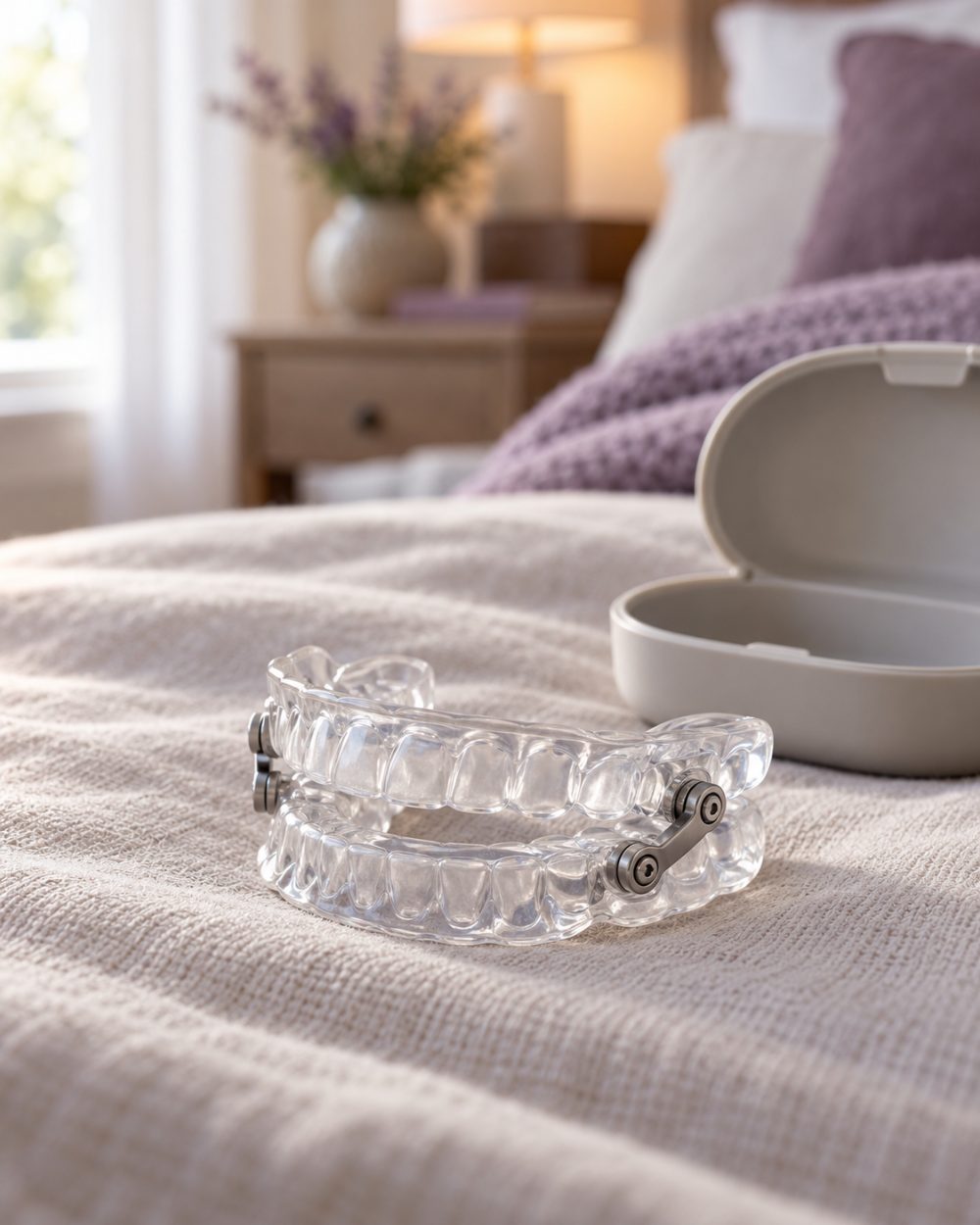
A small, custom-fit oral appliance can treat snoring and obstructive sleep apnea — no mask, no hose, no noise. A quiet, travel-friendly alternative to CPAP, made right here in Woodbury.
Oral appliance therapy
During sleep, the muscles in your throat relax and your tongue and jaw can fall back, narrowing the airway. That’s what causes snoring — and, in sleep apnea, repeated pauses in breathing.
A custom appliance gently holds your lower jaw slightly forward while you sleep, keeping the airway open so air moves freely. It’s molded to your teeth and adjusted over time for comfort and results.
Is it sleep apnea?
Untreated sleep apnea is linked to high blood pressure, heart disease and daytime fatigue. If any of these sound familiar, ask us at your next visit.
The process
We review your sleep history, symptoms and any prior sleep study, and examine your teeth, jaw and airway.
Sleep apnea is diagnosed by a physician. No study yet? We’ll help coordinate testing, including at-home options.
We take precise impressions and have your appliance made to fit your bite, then fit and adjust it in the office.
We fine-tune the fit over several visits and work with your physician to confirm your results.
CPAP alternative
Oral appliances work best for mild to moderate obstructive sleep apnea and for people who can’t tolerate CPAP. Your physician and dentist will help decide what’s right for you.
Questions
Yes. Sleep apnea is diagnosed by a physician through a sleep study. If you haven’t had one, we can help coordinate testing, including at-home options.
For many people with mild to moderate obstructive sleep apnea, oral appliances are an effective first-line option, and they’re recommended for patients who can’t tolerate CPAP. Results are confirmed with follow-up testing.
Oral appliance therapy is often billed to medical insurance rather than dental when you have a diagnosis. Our team will help verify your benefits.
Over-the-counter guards aren’t fitted to your bite and aren’t designed to treat sleep apnea. A custom appliance is adjusted by a dentist and monitored over time to protect your teeth and jaw.
Most patients adjust within a couple of weeks. Mild jaw or tooth tenderness in the morning is common at first and usually fades quickly.
St. Croix Sleep
Schedule a sleep consultation and we’ll walk you through your options.